Every sales deck in our industry has the letters "AI" on the first slide now. Mine included, if I'm honest. So I want to do something a little against my own interest and tell you which parts of the AI-in-VR story are real, which parts are marketing, and how to tell the difference when a vendor is sitting across from you promising the moon.
I run a company that builds VR training, and we use AI in it every day. That's exactly why the hype bothers me. When everything gets called AI, the genuinely useful things get lost in the noise, and buyers start tuning all of it out. So let's separate the two.
The hype: "AI" as a coat of paint
Start with what to ignore.
A lot of what gets sold as AI is a feature that existed five years ago with a new label on it. A branching scenario where you pick option A or option B is not AI. It's a decision tree, and decision trees are old and well understood. They can be excellent. But calling them "AI-powered adaptive learning" is a paint job, and you're often paying a premium for the paint.
The tell is vagueness. If a vendor can't explain, in a sentence a non-engineer would understand, what the AI is actually doing and what it changes for the learner, assume it's doing nothing. Real capability is specific. Hype is fuzzy on purpose, because fuzzy is harder to disprove. When someone says "our platform leverages cutting-edge AI to optimize outcomes," ask them to describe the exact moment in a training session where the AI does something. Watch what happens. The good vendors light up. The rest change the subject.
What's real: conversation that talks back
Here's where it gets genuinely exciting, and it's the part I'd actually pay for.
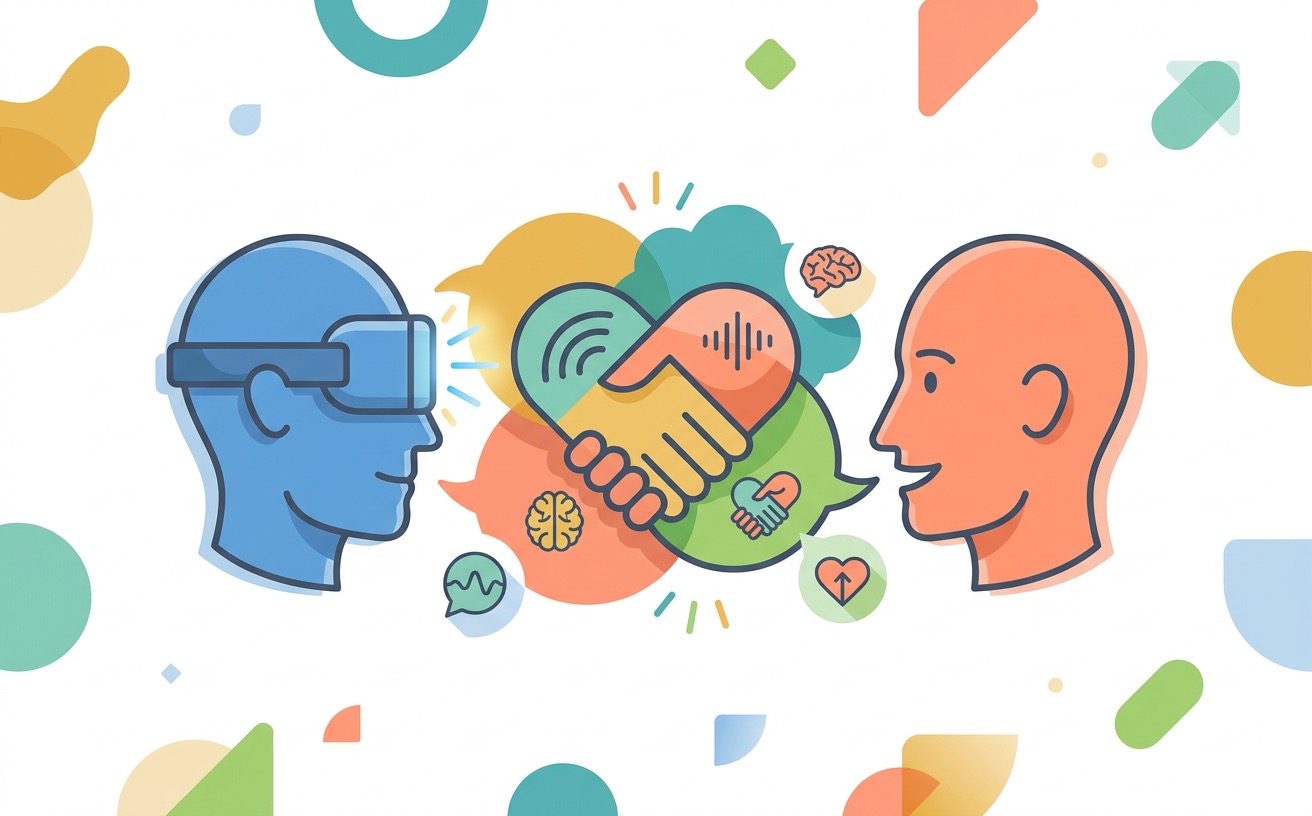
The biggest real shift is the AI-driven virtual human. For years, practicing a difficult conversation in VR meant talking to a character that read from a script. You said your line, it said its line, and everyone knew it was theater. Large language models broke that open. You can now stand in front of a virtual customer, or a distressed patient, or an underperforming employee, and have an actual unscripted conversation. It responds to what you genuinely said, not to the option you were supposed to pick.
That matters enormously for the kind of training that used to be impossible to scale: de-escalation, sales objection handling, difficult feedback, bedside manner. The whole industry has moved this direction for a reason. It's the difference between rehearsing lines and actually practicing, and you can feel it the second you put the headset on.
What's real: training that adapts to the person
The second real change is quieter, and in the long run I think it's bigger.
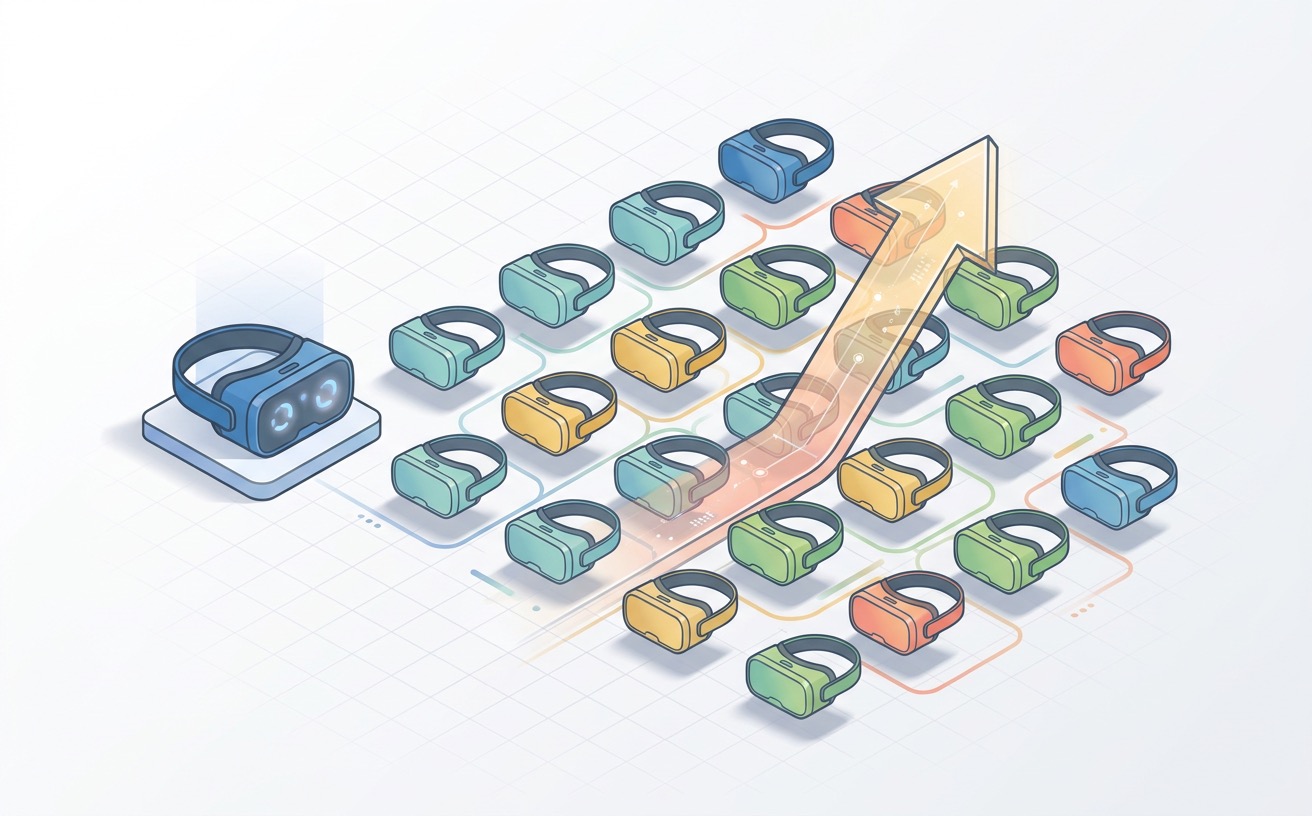
A traditional course gives everyone the same path. A new hire who's never touched the equipment and a fifteen-year veteran get the identical module at the identical pace, which bores one and overwhelms the other. AI lets the training actually respond to the individual. If someone breezes through the basics, it can push them ahead. If someone keeps fumbling the same valve, it can slow down, add a repetition, or surface a hint, without a human instructor watching over every learner's shoulder.
This is the part of our own platform I'm proudest of, so take my enthusiasm with the appropriate grain of salt. But the principle holds regardless of whose software you buy: training that adapts to the learner beats training that treats everyone identically, and AI is finally what makes that practical at scale rather than a luxury you can only afford for executives.
What's real, behind the scenes: building content faster
There's a third place AI is doing real work, and it has nothing to do with the learner's experience. It's the cost of building the training in the first place.
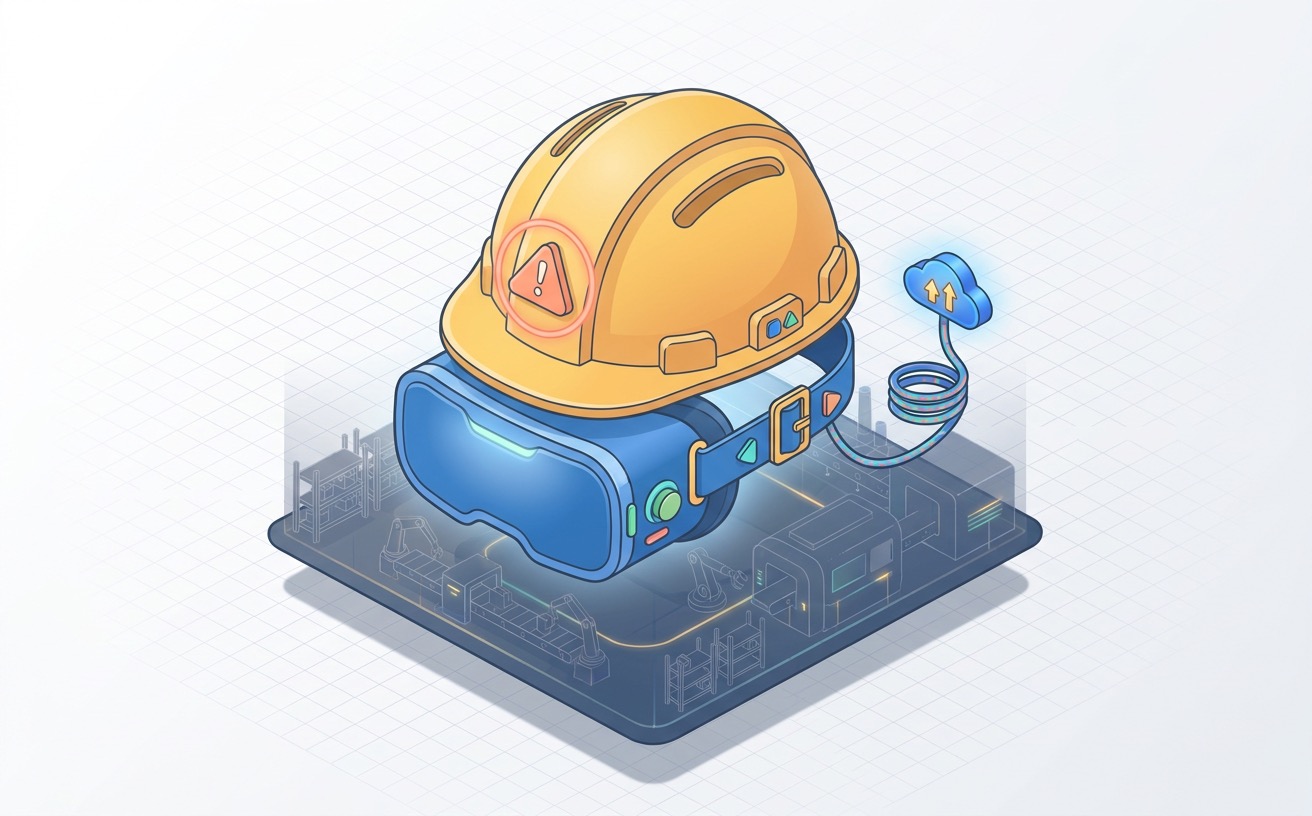
Historically, creating a VR module meant a long, expensive production cycle with 3D artists and developers. AI is steadily chewing into that. Generating environments, drafting scenario scripts, producing voice, building first-draft assets. None of it is magic, and a human still has to shape and check the result. But it's pulling production cost and timelines down, and that's why VR training is reaching budgets that couldn't have touched it a few years ago. You won't see this feature in a demo, but you'll feel it in the quote.
How to tell the difference in a sales meeting
So you're in the room, the deck says AI, and you want to know if it's real. Here's what I'd ask.
Ask them to show you, live, the AI doing something unscripted. Go off the demo rails. Say something to the virtual human that they obviously didn't prepare for, and watch whether it copes or collapses. Ask what specifically happens differently for a struggling learner versus a strong one, and make them point to it on screen rather than describe it on a slide. And ask the unglamorous question: does the AI reduce what it costs you to build and maintain content, and by how much?
If the answers are concrete, you're probably looking at the real thing. If they're a word salad of "intelligent," "adaptive," and "next-generation," you're looking at paint.
The honest summary
AI is changing VR training in three ways that genuinely matter: conversations that respond like a real person, training that adapts to the individual, and content that's cheaper to build. Everything else with "AI" stamped on it deserves a raised eyebrow until proven otherwise.
I'd rather you walk into your next vendor meeting a little skeptical than a little dazzled. The technology is real enough that it doesn't need the hype, and the vendors worth working with won't mind you asking hard questions. If anything, that's how you spot them.
If you want a demo where you're encouraged to go off-script and try to break it, that's the kind we like to give. Talk with an expert and poke holes in it yourself.
Elena Voss is a learning experience designer at Sketchbox focused on AI-driven and behavioral training.