When a company asks me where they should begin with VR training, I almost always point them to the same place, and it surprises them. Not the flashy customer-experience simulation. Not the leadership program. Safety. The least glamorous category on the list is, nine times out of ten, the smartest first project. Let me explain why, because the reasoning is the same reasoning that makes a pilot succeed or fail.
I've watched a lot of first VR projects over the years. The ones that work share a pattern, and safety training fits that pattern almost perfectly.
The whole point of VR is rehearsing what you can't rehearse
Strip VR training down to its core and here's what it's actually for: practicing things that are too dangerous, too expensive, or too rare to practice for real.
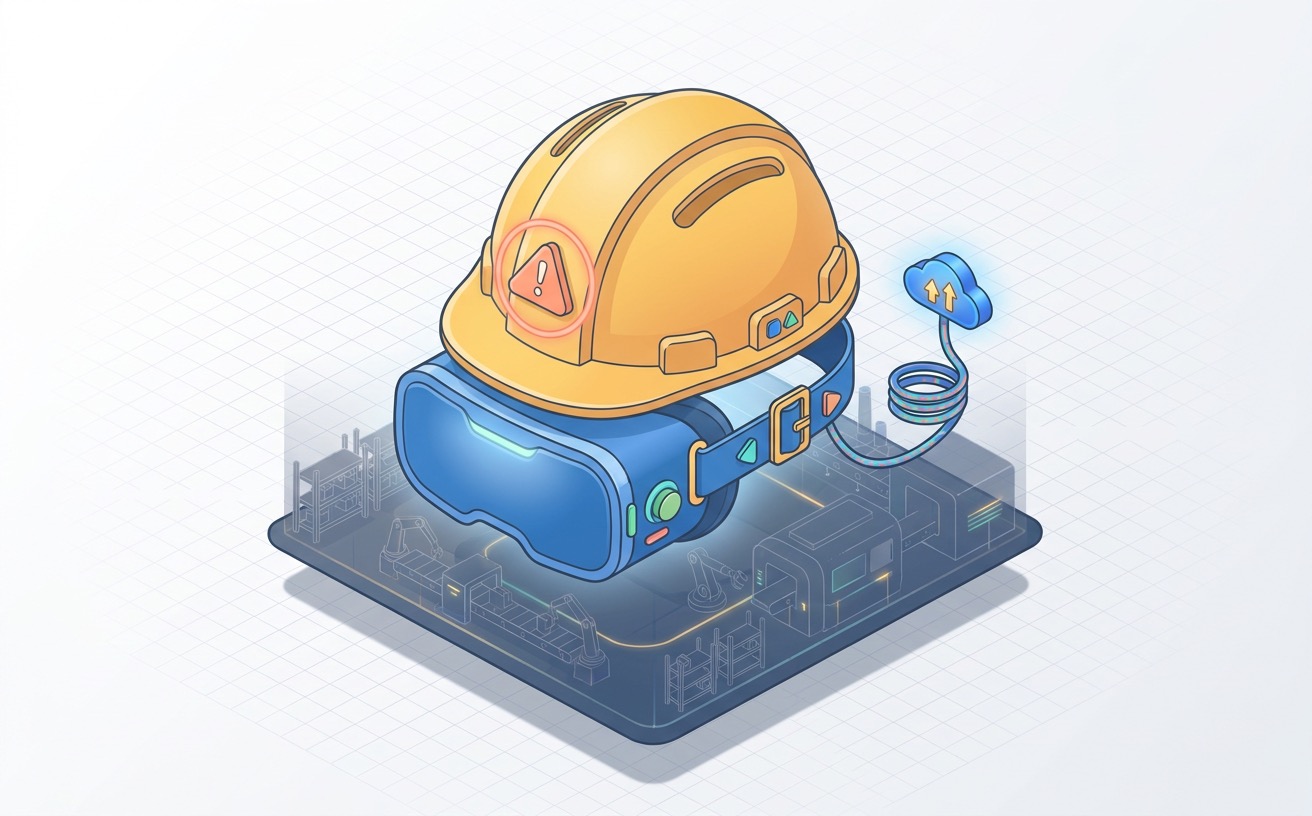
That description is a textbook definition of safety training. How do you teach someone to respond to an arc flash, a chemical spill, a fall from height, a machine guard failure? You can't stage the real thing. It would hurt someone. So historically you've taught it with a slideshow and a quiz, and then hoped the lesson surfaces in the half-second someone actually needs it. It usually doesn't, because reading about a hazard and reacting to one are completely different skills.
VR closes that gap. The trainee stands in the situation, feels the pressure of it, and makes the call with their hands and their body instead of clicking a multiple-choice answer. When the real moment comes, they've been there before. That's the entire value proposition, and safety is where it's most obviously true.
The mistakes are free, which is the point
There's a second reason safety is the natural starting line, and it's the cleanest argument in all of VR training.
In a headset, the worst possible outcome is a reset button. A trainee can skip the lockout step and watch the consequence play out, and the only thing that gets hurt is their pride. You cannot buy that lesson any other way. On a real floor, learning that lesson costs a person. In VR, learning it costs nothing, and the learner can fail as many times as it takes to get it right.
This is why the results show up in the data. Organizations rolling out VR safety programs have reported meaningful drops in workplace injuries, and individual companies have published real cost reductions after switching. I'd treat any single headline figure with care, because every workplace is different. But the direction is consistent and the mechanism is obvious: people who've physically rehearsed the dangerous moment handle it better than people who watched a video about it.
The numbers are easy to prove, and that matters more than you think
Here's the part that makes safety perfect as a first project specifically, separate from whether it's good training.
A pilot doesn't just have to work. It has to be seen to work, by the people who control next year's budget. And safety produces metrics that finance and operations already track and already believe. Incident rates. Near-miss reports. Time-to-competency on hazardous tasks. Lost-time injuries. You don't have to invent a new way to measure success or convince anyone the metric counts. The scoreboard already exists, the company already watches it, and you just need to move the number.
Compare that to trying to prove a leadership-communication pilot worked. The training might be excellent, but the impact is diffuse and slow and argued over. Safety gives you a before-and-after on a number your CFO has stared at for years. That's a gift when you're trying to earn the credibility for a second project.
A word of caution: pick the right hazard
None of this means every safety topic is a good fit, so let me save you a misstep.
The sweet spot is a hazard that's genuinely dangerous or costly to train for the old way, that you train often, and that depends on a physical response rather than memorizing a policy. Working at height, confined space entry, energized equipment, heavy machinery. Those sing in VR.
What doesn't sing is pure compliance memorization. If the "training" is really about getting people to acknowledge they read a document, VR is overkill and you'll have spent a lot to dress up a checkbox. Be honest about which one you have. The physical, high-stakes, frequently-repeated hazards are where VR earns its keep, and they're exactly the ones a slideshow has always handled worst.
Why this makes everything after it easier
The quiet benefit of starting with safety is what it does for your second project.
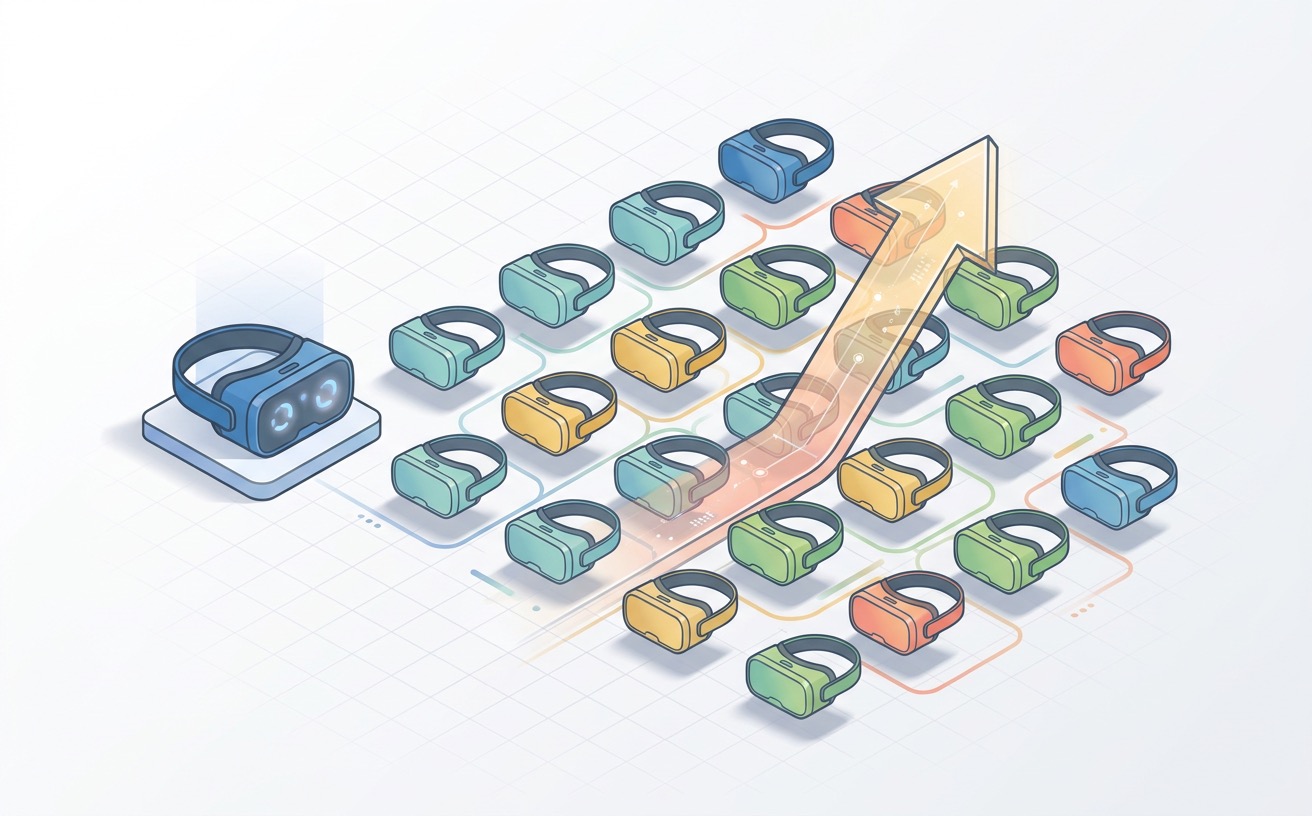
A safety pilot that visibly drops incident rates gives you three things you can't buy: a number that proves the model, a group of employees who've now experienced good VR training and will vouch for it, and the political capital to fund something more ambitious. I've seen companies use a single successful safety rollout to unlock budget for onboarding, operations, and customer training over the following two years. The safety project didn't just stand on its own. It was the wedge.
So when people ask where to start, that's why I keep pointing at the least exciting box on the menu. It's the project most likely to work, easiest to prove, and best at opening the door to everything else. Start where the case is undeniable, and earn the right to get creative later.
If you've got a hazardous, repeated training program in mind and want to talk through whether it's the right first pilot, that's squarely what we do. Talk with an expert and we'll give you a straight answer.
Marcus Hale leads enterprise deployments at Sketchbox, with a background in industrial safety and operations training.